
Light and shadowin white backgroundproduct photography
A white background looks like the simplest shot there is. Yet getting a clean white without the product floating in mid-air or sinking into grey is one of lighting's most exacting tasks.
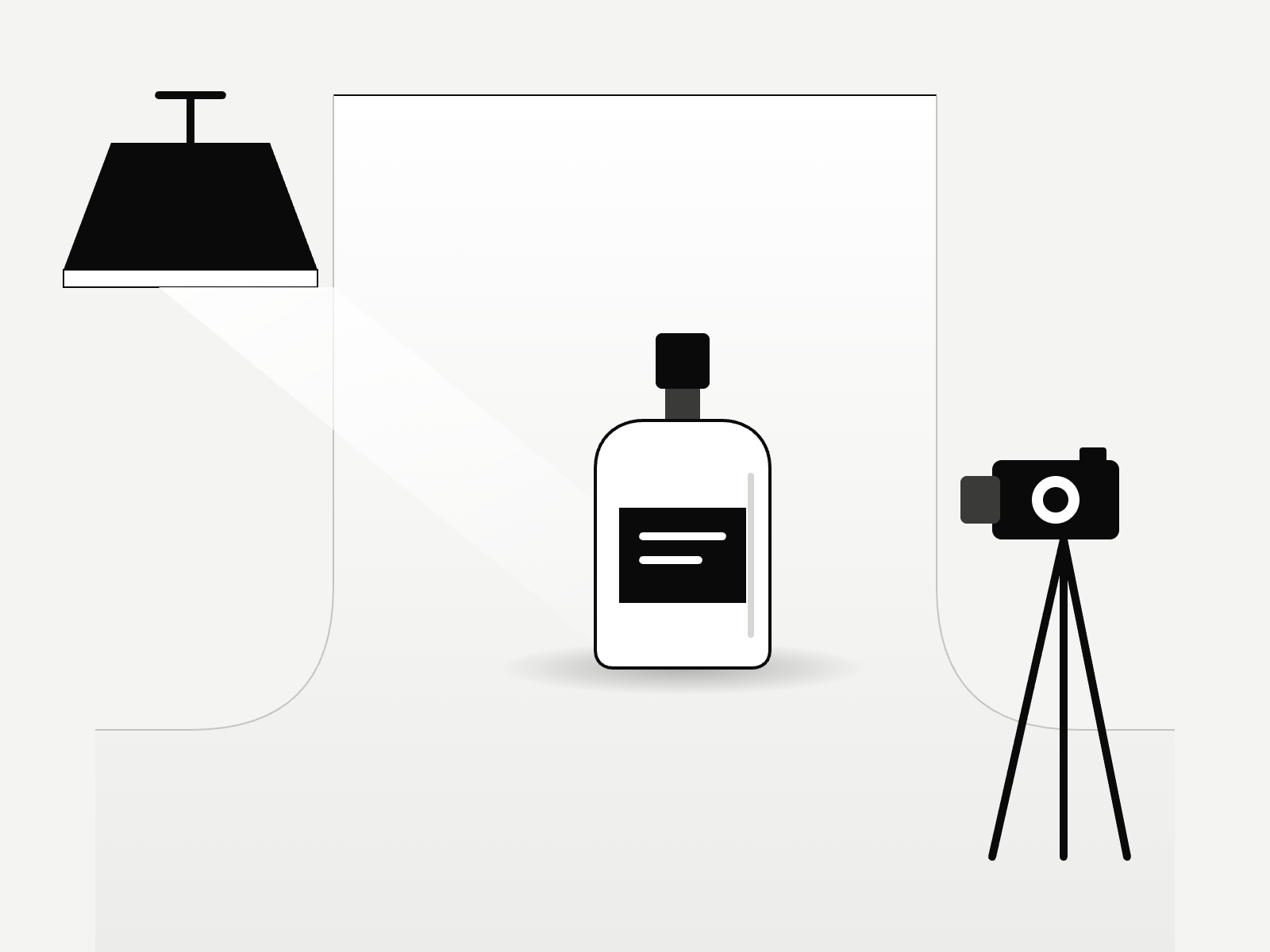
White background product photography is the shared language of e-commerce and catalogues. Yet the difference between two white background photos is often felt rather than seen: one looks clean, crisp and trustworthy; the other a little dull, a little grubby, a little "shot at home". What makes the difference isn't the background itself but how light and shadow are handled. In a good white background photo, the background is white, yet the product still sits firmly on the surface and every face reads clearly.
Why a white background doesn't come out white on its own
A camera treats the average brightness of a scene as mid-grey. Put a white sheet in front of it and it will try to pull that white towards grey. For the background to look truly white, product and background have to be lit separately: the background is kept slightly brighter than the product, but not so bright that light spills over the edges and melts them away. Too much light creates a halo around the product and swallows fine detail; too little leaves a greyish, blotchy surface. The right balance comes from metering and test shots.
A shadow grounds the product
A product with its shadow completely removed seems to hover on the page. In some designs that's a deliberate choice, but more often it makes the product look unreal. A soft, short contact shadow beneath it conveys weight and volume. Its direction and density should be identical across the whole catalogue. Shadows added later in software often contradict the direction of the light, and the eye notices. The most convincing shadow is the one built with light during the shoot.
Reflections: the test for shiny products
Metal, glass, glossy plastic and lacquered surfaces reflect everything around them: the lights, the studio walls, even the camera. With these products, light doesn't just illuminate; it is drawn onto the surface. Large, soft light sources create smooth highlights on metal, while black and white panels define the edges and reveal the form. Being able to read the thread, the cast body and the polished parts of a metal piece separately is the result of that control. Some products also call for a subtle reflection underneath, achieved by shooting on a glossy surface, which gives them an elegant presence.
Pure white or off-white?
Many marketplaces require a pure white background for the main image, meaning every point of the background must be fully white. For your own website or catalogue, a slightly warm or very pale grey background sometimes suits the brand better. What matters is that the choice is deliberate and, once made, doesn't change. The background is captured as clean as possible in camera, and the final touches happen in retouching: cleaning edges, removing dust and marks, and matching the white across every frame.
Consistency: same light, same distance, same angle
One beautiful frame isn't enough; the real strength of a white background shows when hundreds of products sit side by side. To get there, the lighting setup, camera height, distance and angle are set once and kept for the entire shoot. Products of similar size appear at a similar scale, shadows fall the same way, and the white is the same white in every frame. The category page then reads like a well-kept shop window. That's exactly what gets lost when photos are taken on different days in different places.
Is swapping the background with AI enough?
Plenty of tools can now turn the background of a phone snapshot white in seconds. For a quick draft or a secondary image, that works. But removing the background doesn't fix the light on the product: light from the wrong direction, blown highlights, lost texture and a fake shadow all remain. AI saves real time in retouching, edge cleanup and repetitive tasks; a great result, though, still starts with a frame shot in good light.
In short
A good white background product photo comes from a background that's clean without melting the product, a natural shadow that grounds it, controlled reflections on shiny surfaces and the same setup across the whole catalogue. At Serezart Creative Studio we've spent more than 20 years shooting everything from cosmetics to industrial parts with this level of care in our Istanbul studio, and we deliver the images sized for every place they'll be used. Learn more about our product photography, or request a quote to plan your shoot.
About white background shoots.
With or without a shadow?
Are shiny and metal products harder to shoot on white?
Can't I just make the background white in software?
More articles
 Photography
What makes a good e-commerce product photo?
A clean background, the same light across the catalogue, planned angles and true colour: the rules of photos that sell online.
 AI
Building a website with AI a fast start, hidden costs
You can launch a site in minutes. It pays to know the costs that surface later in security, speed, SEO and maintenance.
 Web
The essentials of an SEO-ready website
From titles to sitemaps, from speed to structured data: the groundwork that helps search engines understand your site properly.