
What makesa good e-commerceproduct photo?
Online shoppers can't touch your product; they only see its photo. Most buying decisions are made in those frames.

On a product page, every shopper asks the same questions: What does it really look like? Is that the true colour? How big is it? How would it feel in my hand? A good product photo answers all of them before they are asked. A poor one makes even the best product look ordinary.
1. A clean, consistent background
For the main image, a white background is the safest choice. It separates the product from every distraction, reads quickly on the page, and many marketplaces require a white or light background for the main image. What matters is not just white, but the same white across every product. When one product looks greyish and the next creamy, the category page looks messy and the brand loses trust.
2. The same light on every product
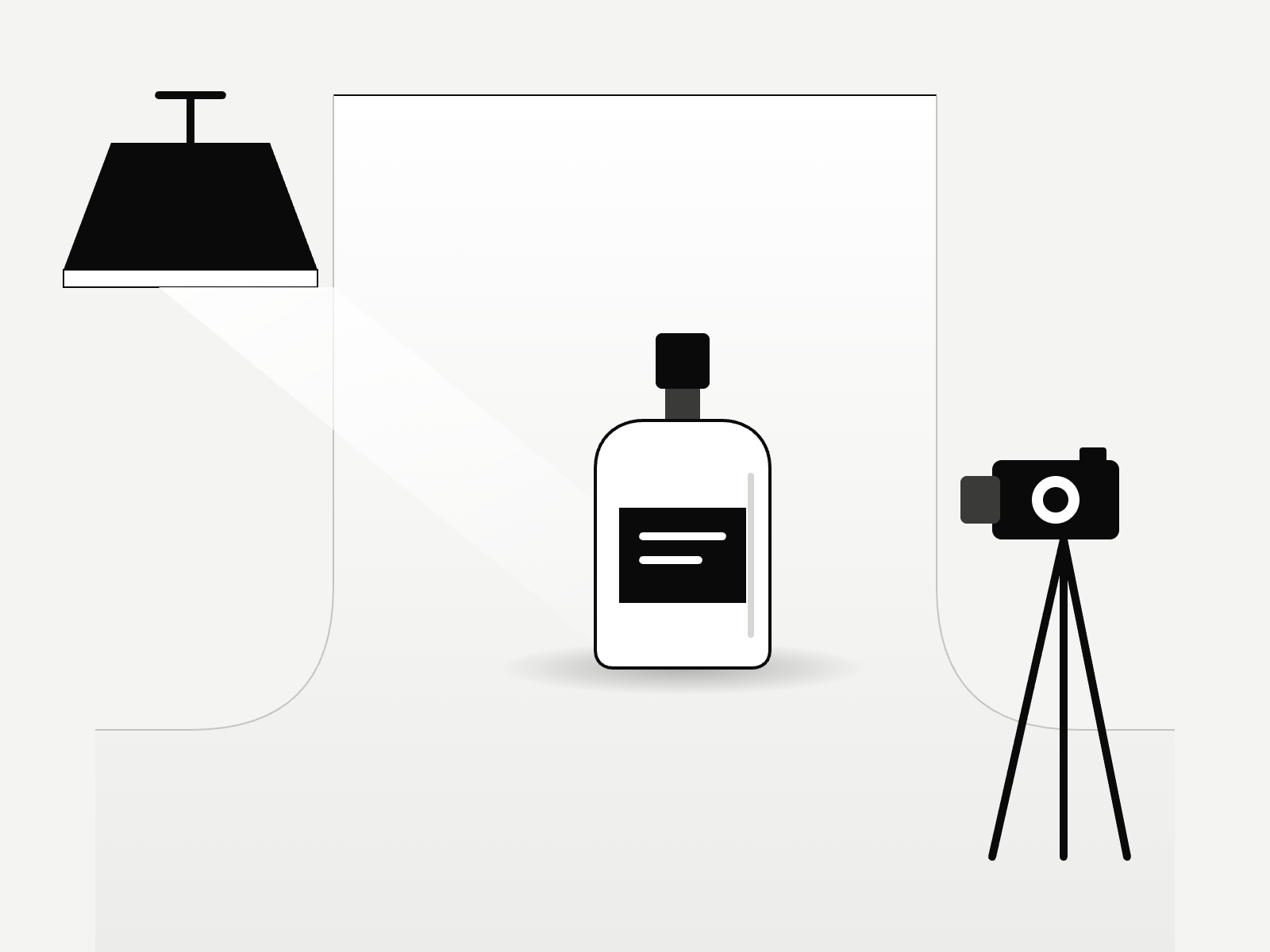
Light tells the story of the material. The shine of a glass bottle, the texture of fabric, the reflection of metal only show with the right lighting. In e-commerce, light has a second job: consistency. When the same lighting set-up runs through the whole catalogue, products sitting side by side look like one family. That is why shooting with a phone by the window on different days hurts the store's overall look the most.
3. One frame is not enough: plan your angles
In a shop, people turn a product around, check the back and look at the details. Your photos need to recreate that experience. For most products, a good starter set looks like this:
- Main image: the whole product, front-on or at a slight angle, on white.
- Other angles: side, back and top views.
- Detail: close-ups that show quality, such as texture, stitching, caps or labels.
- Scale: a frame that shows size, in a hand, in a setting or next to a familiar object.
- In use: a styled frame showing the product in everyday life.
4. Keep colour true to life
"It looked different in the photo" is one of the most common reasons for returns. Colour correction and retouching are not there to make a product look different, but to show it as it is: dust and scratches are removed, white balance is set and colour is matched to reality. What makes a product beautiful is the right light, not a filter.
5. Sizes and formats for every channel
The same photo is needed in different sizes and ratios for your own website, various marketplaces, social media and print catalogues: a square main image, a vertical social post, a high-resolution print file. Defining these needs before the shoot also decides where the product sits in the frame, so nothing gets cut off when the image is cropped later.
6. Styled shots tell the brand story
A white background sells the product; a styled scene tells the brand story. Frames that place the product in a setting help customers picture it in their own lives, which is ideal for catalogues, ads and social media. A good product shoot plans both: on the same day, with the same approach to light, you get frames that sell and frames that build the brand.
In short
Product photos that sell come from a clean background, the same light across the catalogue, planned angles, true colour and sizes that fit each channel. At Serezart Creative Studio, we have been photographing products for brands, from cosmetics and textiles to food and industrial products, in our studio in Istanbul for more than 20 years. See our product photography service for details, and if you would like to build your store with us, our web and e-commerce service is under the same roof.
About product photography.
Can product photos be shot with a phone?
How many photos does a product need?
Do marketplaces need a separate shoot?
More articles
 Photography
Light and shadow in white background product photography
Pure white, a natural shadow that grounds the product and controlled reflections: the hidden details of white background shots.
 AI
Building a website with AI a fast start, hidden costs
You can launch a site in minutes. It pays to know the costs that surface later in security, speed, SEO and maintenance.
 Web
The essentials of an SEO-ready website
From titles to sitemaps, from speed to structured data: the groundwork that helps search engines understand your site properly.