
Food photographyfor restaurantmenus
Guests usually see a dish before they taste it. A single photo on the menu can decide whether a plate gets ordered.
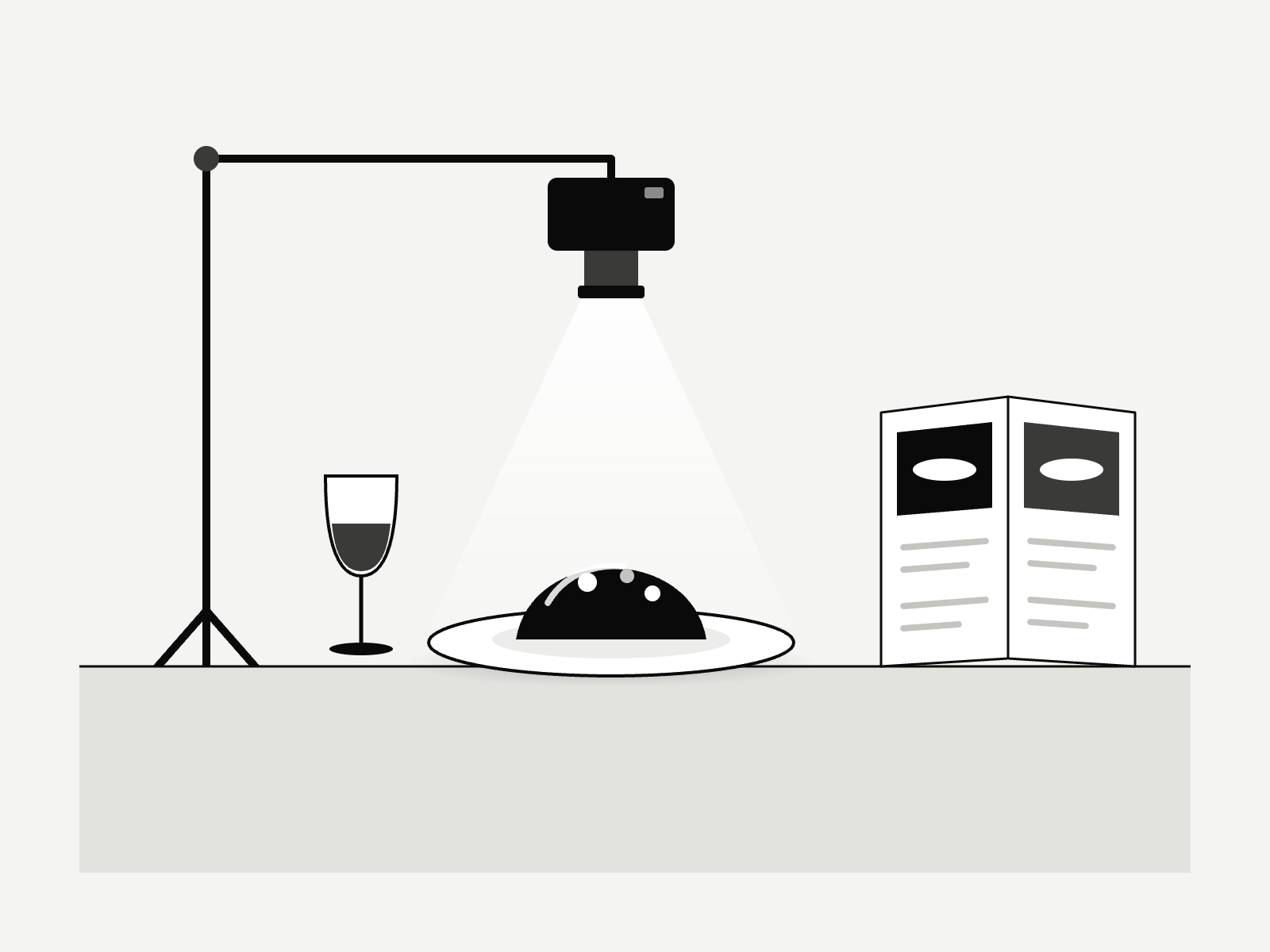
A restaurant menu is no longer just the paper on the table. The same photos appear on the QR menu, social media, delivery apps and signage. That is why a food shoot should be planned not as photos of single plates, but as the visual language of the whole menu.
1. Plan the menu before the shoot
Which dishes will be shot, how they are grouped on the menu and where each category will be used should be clear from the start. Starters, mains, desserts, drinks: each group can have its own styling, but all should look like parts of the same menu. With a shot list ready, the kitchen can prepare plates in the right order and at their freshest.
2. Plating, presentation and timing
In food photography, time is everything. The shine of a sauce, melting cheese, steam rising from a hot plate and fresh greens fade within minutes. On the shoot day, the kitchen and the photographer need to work in the same rhythm: a plate is prepared and shot right away, because the lighting is already set.
3. The same light across the menu
Light is the key to showing the warmth of a dish and the true colour of its ingredients. On a menu, it also means consistency. When every dish is shot with the same light and the same approach to angles, the menu page looks orderly and appetising. Frames shot on different days in different light make even the tastiest dish look dull next to each other.
4. Styled scenes or white background?
Both have their place:
- Styled scenes: set-ups with wood, stone or fabric surfaces and props. They whet the appetite and convey the venue's atmosphere; ideal for menu covers, social media and promotion.
- White background: clean, clear product shots. They introduce dishes quickly on long menus, delivery apps and QR menus.
For most restaurants, the best result comes from planning both in the same shoot.
5. Frame photos for the menu layout
On a printed menu, the photo's ratio and spacing are set by the page layout; on a QR menu, by the size of the product card. When the shoot and the menu design happen in the same place, frames are composed for these layouts from the start, so plates don't get cut off and there is room for text.
6. The role of photos on a QR menu
On a QR menu, guests browse dishes one by one on their phone screen. Here the photo replaces the waiter's description. Clear, consistent and appetising shots make the decision easier. For Menujoo, the QR menu platform developed by our studio, we also deliver the photos we shoot in sizes that fit the platform.
In short
A good menu photo comes from a planned shot list, timing in sync with the kitchen, the same light across the menu and frames composed for the menu layout. At Serezart Creative Studio, we have been photographing dishes for restaurants, cafés and food brands for more than 20 years. See our photography service for details, and if you would like us to design your menu too, take a look at our design service.
About food photography.
Where do food shoots take place?
Can the menu design and the shoot be done together?
Can the photos be used on a QR menu?
More articles
 Food photography
Light in food photography: natural or studio?
Window light or studio light? Choosing the right light for food photography by direction, colour temperature and consistency.
 AI
Building a website with AI a fast start, hidden costs
You can launch a site in minutes. It pays to know the costs that surface later in security, speed, SEO and maintenance.
 Web
The essentials of an SEO-ready website
From titles to sitemaps, from speed to structured data: the groundwork that helps search engines understand your site properly.