
How to choosean e-commerceplatform
The platform is the invisible foundation of your store. Choose the wrong one and the problems show up not on day one, but on the day you start to grow.
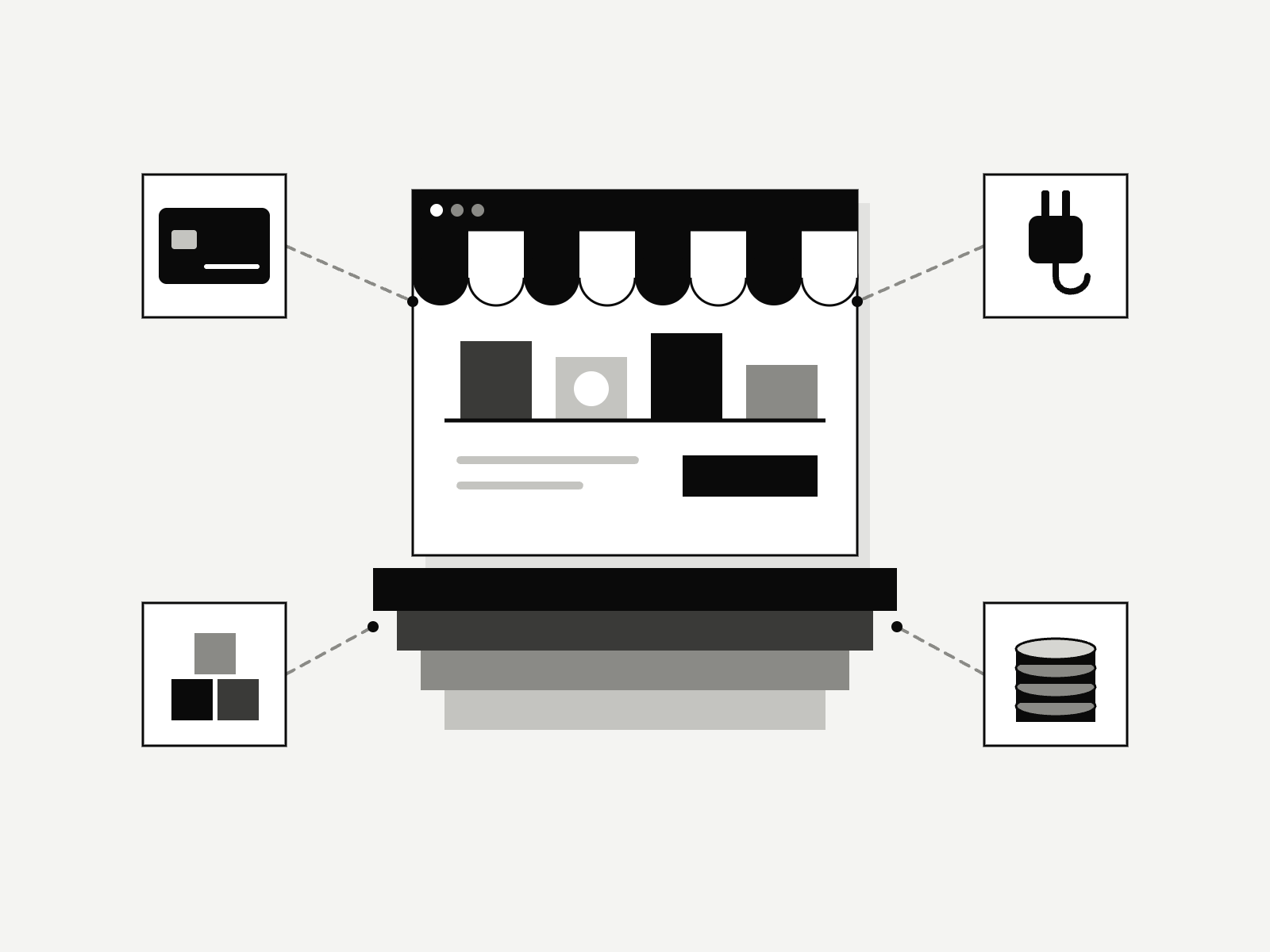
Most people starting out in online retail ask the same question first: which platform is best? The honest answer is that no e-commerce platform is best for everyone. A boutique launching with a hundred products and a manufacturer who has to sync thousands of SKUs with warehouse software will not be happy on the same system. The right choice starts not with a feature list, but with how your business actually runs.
Write down your own needs first
Before looking at any platform, clear answers to these questions get you halfway there:
- Range and structure: How many products do you have, and how many will you have in a year? How complex are variants like size, colour or material?
- Payments: Which payment provider will you use? Do you need instalments, bank transfer or cash on delivery? Will you sell abroad?
- Integrations: Does the store need to talk to accounting software, e-invoicing, couriers, marketplaces, a warehouse or an ERP system?
- Budget: Think beyond the build: monthly subscriptions, add-ons, hosting and maintenance all count.
- Team: Who will run the site? How easy do adding products and tracking orders need to be?
As you write this list, think not only about today but two or three years ahead. A brand selling only at home today may want to go international tomorrow; stock entered by hand today may come from warehouse software tomorrow; a single-language site may need a second language. Switching platforms later is possible but laborious. Discussing growth from the start helps you avoid a migration down the line.
WordPress and WooCommerce
WooCommerce is an e-commerce plugin built on WordPress. Its greatest strength is flexibility: content pages, a blog and the shop live in one place, you have near-total control over design, and a large plugin ecosystem often provides ready-made integrations for local payment providers, couriers and accounting. You control the server, and the site and data are yours.
In return, the responsibility is yours too. Hosting, updates, security and backups need regular attention, and as plugins pile up, speed and compatibility need watching. For businesses that want to tell their brand story and run a mid-sized catalogue, it is often a strong choice.
Shopify
Shopify is a subscription platform where hosting and security are handled for you. It is a comfortable route for brands that want to launch quickly, avoid technical upkeep and sell internationally. The admin is clean and the app store is extensive.
There are things to watch: the monthly plan and the fees for apps you add accumulate over time, and it is worth checking in advance whether your preferred payment provider is supported and whether extra transaction fees apply. Design and workflows take shape within the limits the platform allows.
A custom build
If your business model does not fit off-the-shelf systems, custom development starts to make sense: dealer-specific pricing, complex product configurators, deep integration with an existing ERP or an order flow that is entirely your own. Everything is built around the need, with no unnecessary weight.
The trade-off is a longer build and a higher upfront investment. Who maintains the system long term, and who owns the code, should be settled from the start. For a simple shop, custom software is usually heavier than it needs to be.
Hidden costs and questions
The points most often overlooked are the ones you cannot see on day one. If you grow or want to switch systems, can you export your products, customers and orders? Does the site stay fast as the catalogue grows? Can you edit page titles, URLs and descriptions for search engines? Can legal pages such as privacy notices, cookie consent and terms of sale be set up properly? The answers may matter more than the monthly fee.
Many people now start this comparison by asking ChatGPT, Gemini or Perplexity. They are useful for a general overview, but they do not know your product structure, your relationship with your payment provider or your team's habits, so they cannot make the final call. That decision is best made together with someone who has listened to how your business works.
In short
The right e-commerce platform depends on your product range, payment and integration needs, budget and the team that will run the site. WooCommerce offers flexibility and control, Shopify speed and low maintenance, and a custom build a perfect fit. At Serezart Creative Studio, we have been building websites and online stores for more than 20 years, and we are not tied to any single platform; we recommend the system that best fits the project. We train your team free of charge and provide technical support for the first year. Learn more about our web and e-commerce service, or use our quote form to talk about your project.
About e-commerce platforms.
Which platform suits a small shop?
Can I switch platforms later?
Do I need marketplace integration?
More articles
 Web
The essentials of an SEO-ready website
From titles to sitemaps, from speed to structured data: the groundwork that helps search engines understand your site properly.
 Web
The pages every corporate website needs
Every page answers one of the visitor's questions. The pages a corporate website needs, and what belongs on each of them.
 AI
Building a website with AI a fast start, hidden costs
You can launch a site in minutes. It pays to know the costs that surface later in security, speed, SEO and maintenance.