
What isbrand identity?
If you can recognise a brand without seeing its logo, it has a strong identity. Colour, voice, attitude and consistency work together.
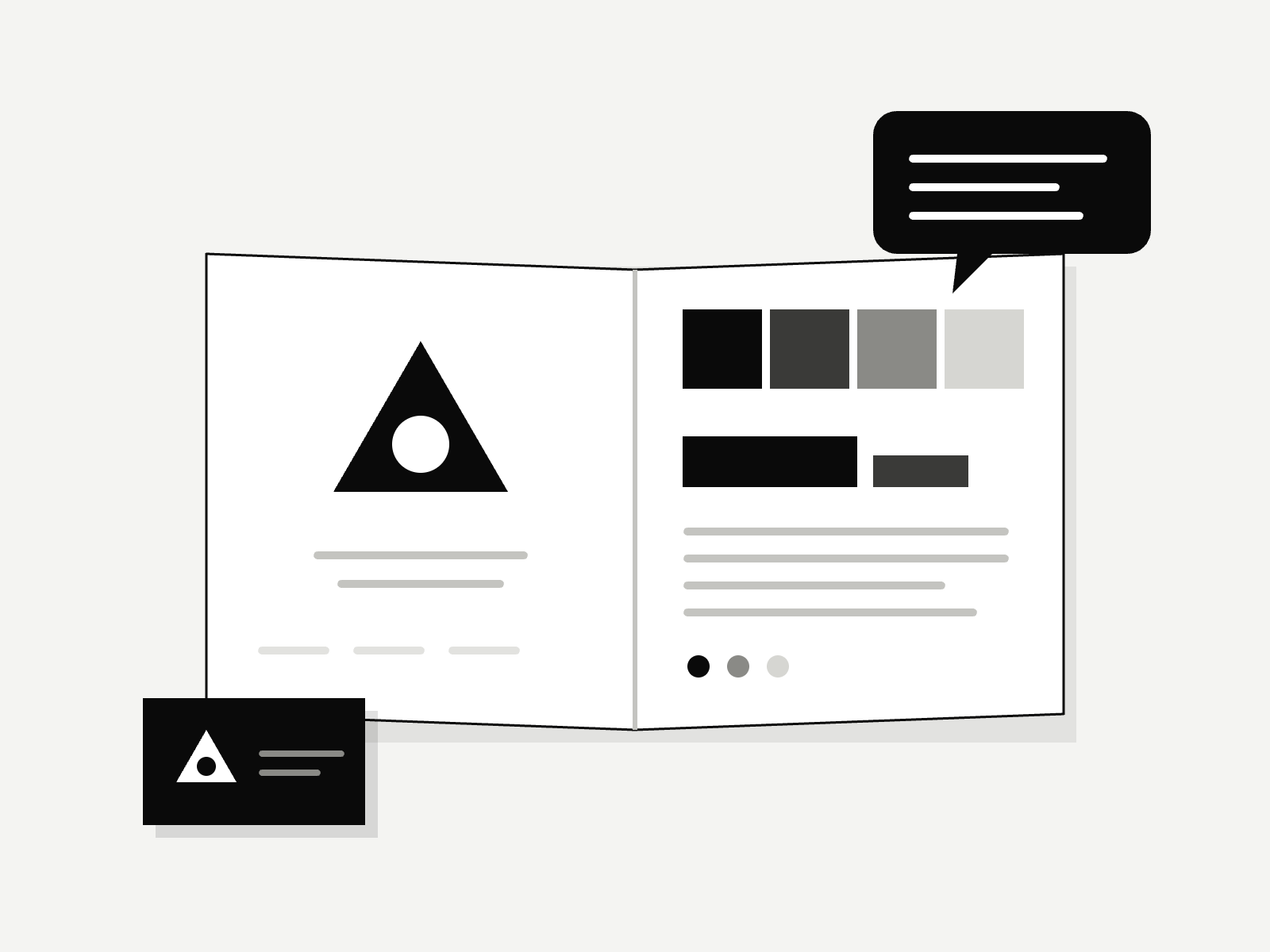
Brand identity is the sum of how a brand presents itself to the world: how it looks, how it speaks, what it stands for and how consistently it does all this at every touchpoint. It's often confused with the logo, but the logo is only one part of the whole. Colours, materials, lines and form convey a character before a single word is read. Brand identity means defining that character deliberately and carrying it everywhere.
Visual identity: the brand's visible face
Visual identity covers every element of the brand that speaks to the eye:
- Logo and its versions: the main logo, horizontal and vertical lockups, a simplified mark for small sizes.
- Colour palette: primary and secondary colours, with separate values for print and screen.
- Typography: typefaces for headings and body text, with rules for size and hierarchy.
- Visual language: the light and tone of photography, the style of icons and illustrations, graphic elements, use of space.
- Applications: business cards, letterhead, presentations, social media templates, packaging, signage, website.
Each element may be attractive on its own; their real value lies in telling one character together.
Verbal identity: the brand's voice
A brand doesn't just look a certain way; it speaks. A line on the website, an email, a reply on social media and a short text on the packaging should all sound as if they came from the same person. Verbal identity defines the brand name, tagline, tone of voice (formal or friendly, technical or plain), the way it addresses people, and the words it uses often or never. Brands with a strong visual identity but copy written in a different voice every time leave visitors with a vague sense of disorder.
Values and positioning: the foundation beneath
Choices of colour and typeface aren't made in a vacuum. Who the brand serves, how it differs from competitors and what it cares about drive every identity decision. A finance brand built on trust and a sports brand built on daring will use even the same colour differently. Identity work done without defining this foundation stays a pretty surface that's easily swapped out.
When should a brand identity be reviewed?
An identity isn't something you build once and forget. A review is due when the company enters a new market, its range of services changes, two brands merge, or the identity has frayed over the years in different hands. That doesn't always mean starting from scratch; often existing elements are simplified, missing rules are filled in and scattered applications are brought back into line. For a brand people already recognise, the aim is to bring the identity up to date without losing the value it has built.
Consistency: what turns an identity into one
The power of brand identity comes from repetition. When the same colours, voice and attitude carry on for years across every channel, people start recognising the brand without looking at the logo. When consistency slips, every new piece of material blurs the brand a little more. The most practical remedy is a brand guidelines document: it brings together how the logo is and isn't used, colour values, typefaces, sample applications and the verbal tone. Even when agencies change, the team grows or a new supplier comes on board, the identity stays the same.
Can AI build a brand identity?
AI tools can suggest colour palettes and sketch logo drafts, and assistants like ChatGPT or Claude can write sample copy for a brand's tone of voice. At the idea stage, that's genuinely useful. But an identity isn't a collection of pieces that happen to look good; it's a system that grows out of the brand's strategy. Palettes and tones everyone produces with the same tools start to resemble each other; what sets a brand apart are the decisions of a team that knows why each choice was made. AI speeds the process up; professionals set its direction.
In short
Brand identity is visual identity, verbal identity and the values beneath them, kept alive consistently everywhere. At Serezart Creative Studio we've been creating logos and corporate identities for brands in Istanbul for more than 20 years, and we can bring an identity to life under one roof, from photography and websites to promotional films. Learn more about our logo and corporate identity services, and our other fields on the services page.
About brand identity.
Are brand identity and corporate identity the same thing?
Does a small business need a brand identity?
Why do we need brand guidelines?
More articles
 Branding
How to write a good brief for your agency
Goals, audience, competitors, references, budget and timeline. A good brief gets half the job done before the first meeting ends.
 AI
Building a website with AI a fast start, hidden costs
You can launch a site in minutes. It pays to know the costs that surface later in security, speed, SEO and maintenance.
 Web
The essentials of an SEO-ready website
From titles to sitemaps, from speed to structured data: the groundwork that helps search engines understand your site properly.