
Can AI replaceproductphotography?
AI can build a stunning scene. But customers do not buy the scene; they buy the product that arrives at their door.
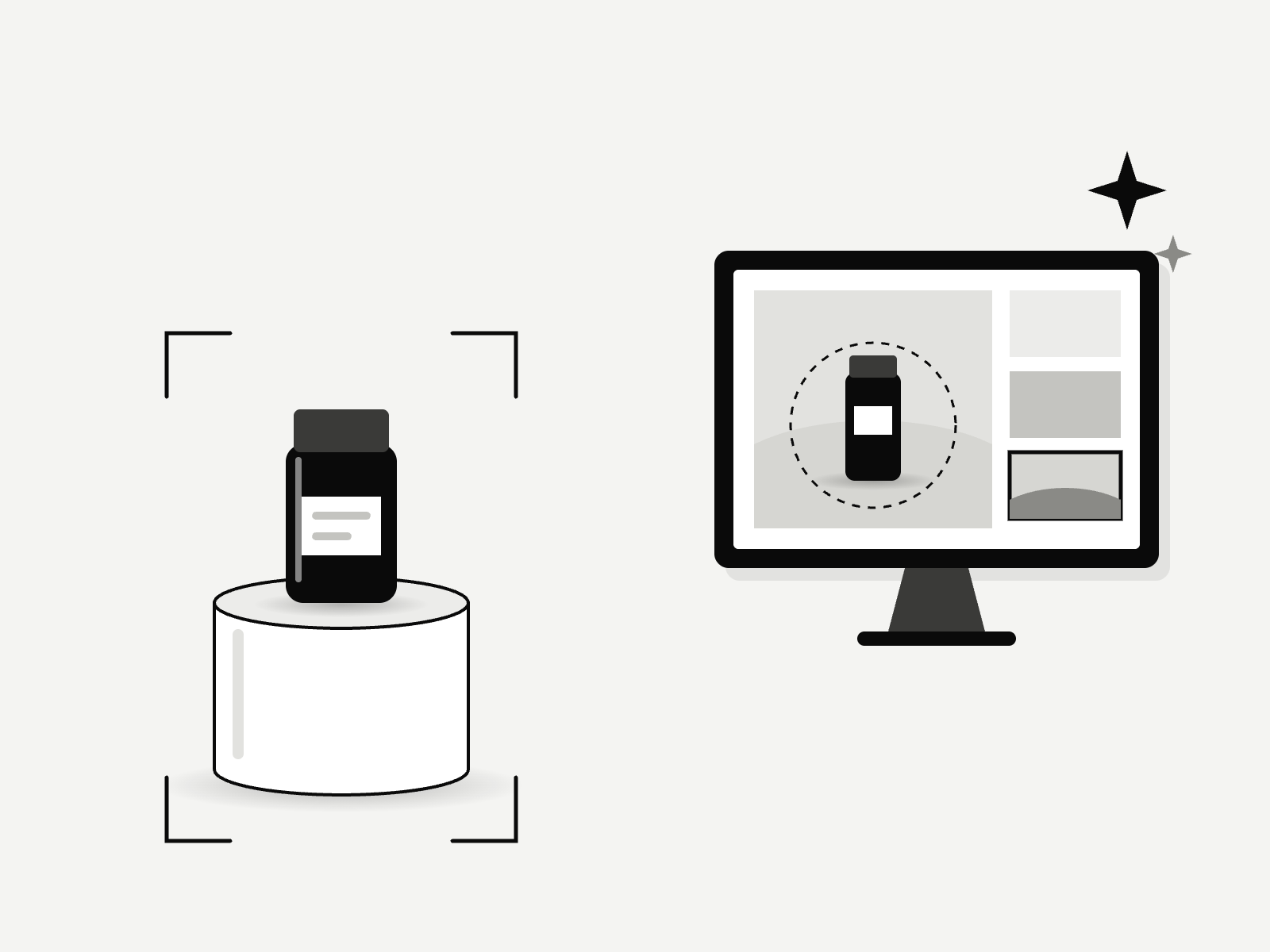
Type a product name and a sentence or two of description, and you can now see a perfume bottle standing on a marble table in morning light. That convenience leads many businesses to the same question: can AI replace product photography? The short answer is that it can speed up parts of it, but it cannot stand in for showing the product itself. The long answer lies in telling apart what can be generated and what has to be shot.
A generated image does not show the real product
The core job of a product photo is to document: this is the texture of the fabric, this is the colour of the cap, this is the size of the bottle. An image generated from scratch shows not the product, but something that resembles it. Label text gets garbled, the shape of a lid shifts, stitching disappears, a colour drifts by a shade. These differences may go unnoticed at first glance; the customer holding the product will notice.
The result is a twofold risk. First, returns: "it looked different in the photo" is already one of e-commerce's best-known problems. Second, trust: once a customer feels misled, they start doubting not just that product but every image the brand shows. Some marketplaces and ad platforms also expect the main product image to represent the item accurately.
The sameness problem
When everyone uses the same tools, the results start to look alike. Soft daylight, a marble surface, a few leaves, a blurred background... AI-generated product scenes quickly turned into a familiar template. If you want to build your brand's visual language, that template belongs to everyone, not to you. In a real shoot, light, props and composition are built around the brand's character.
Then there is consistency. In a catalogue, dozens of products sit side by side. In a real shoot, the same lighting setup, backdrop and angle repeat across every product, and the store looks like a whole. With images generated one by one, the direction of light, the hardness of shadows, perspective and colour temperature can shift from frame to frame. Differences invisible in a single image become a messy picture once they line up on a category page, quietly eroding the brand's credibility.
Where AI genuinely helps
None of this means keeping AI out of photography. Layered on top of a real shoot, it adds both speed and quality:
- Retouching: dust, scratches, small reflections and fingerprints are cleaned up much faster.
- Backgrounds: cutting out from white, extending a backdrop or adapting it to new ratios becomes easier.
- Format adaptation: when the frame needs extending to create square, vertical and horizontal versions of the same shot, it saves time.
- Pre-production: quick sketches of scene ideas and light direction before the shoot help the whole team picture the same thing.
The common thread: the product itself always comes from a real shoot. AI cleans, adapts and speeds up that reality; it does not replace it with a copy. In practice, a good workflow runs like this: the product is shot in the studio with the right light, colour is matched to reality, AI-assisted tools handle clean-up and adaptation, and the final check is still made by a human eye, side by side with the product itself.
Who decides what is right?
Editing an image with AI is easy; knowing where to stop is hard. Spotting the line where retouching stops showing a product as it is and starts showing it as something else takes an experienced eye. Keeping colour true, materials readable and the same lighting language across a whole catalogue is the call of the photographer and designer. The tool is the same; the result depends on the knowledge of whoever is directing it.
Consider, too, that people increasingly research products through platforms like ChatGPT, Gemini or Perplexity. When recommending products, these platforms lean on real, consistent and reliable sources. A store that shows its products honestly stands on firmer ground in this new way of searching as well.
In short
AI will not replace product photography; used well, it makes it faster and better. The real product is shot in the studio, and AI steps in for retouching, backgrounds and formats. At Serezart Creative Studio, we have been shooting product photography in our Istanbul studio for more than 20 years and deliver images sized for wherever they will be used. Learn more about our photography service; to build the store these photos will live in, see our web and e-commerce service, and for visual identity, our design services.
About AI and product photography.
Can I generate all my product images with AI?
Does AI retouching make a product misleading?
Can AI be used for styled scenes?
More articles
 AI
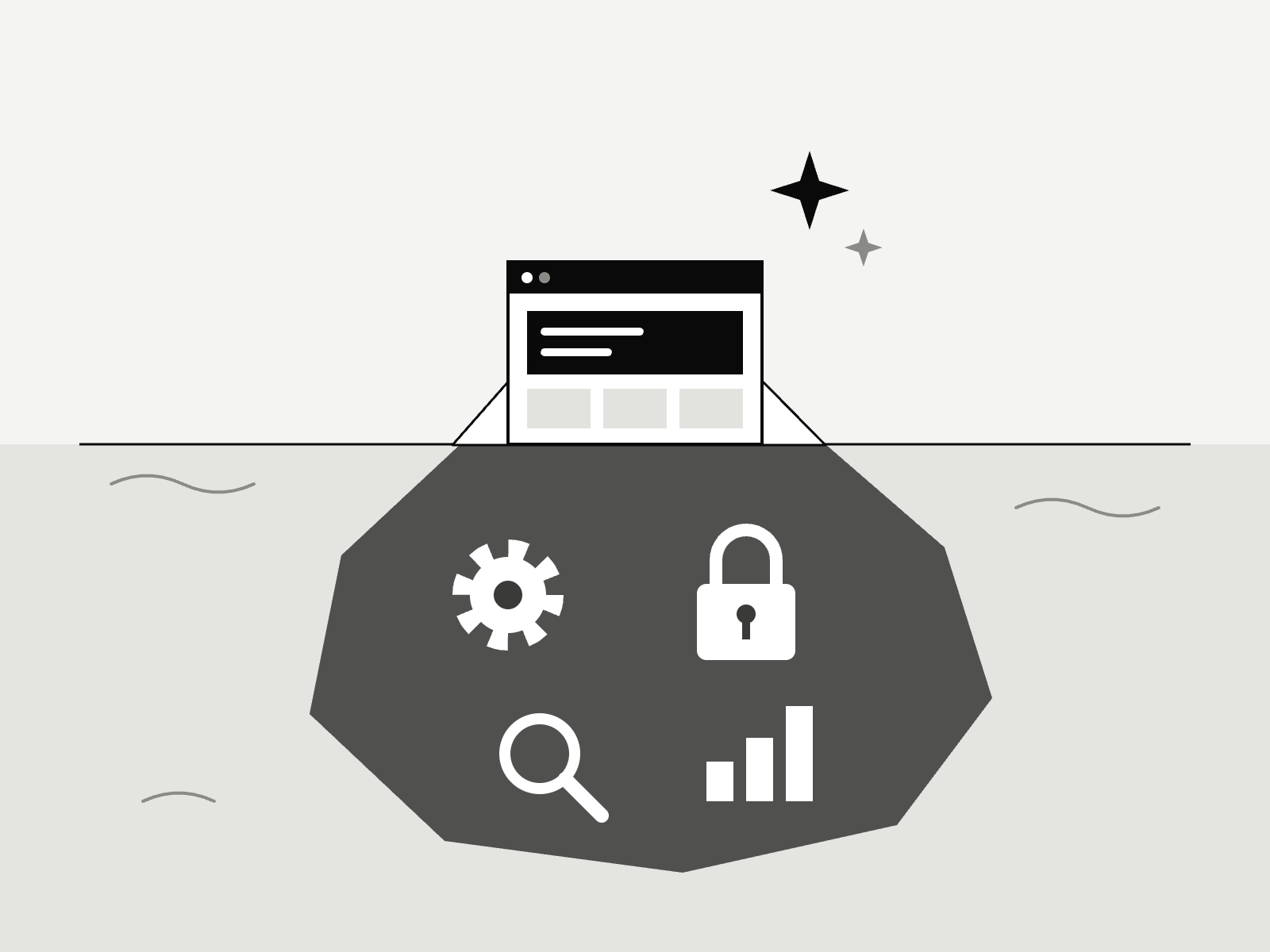
Building a website with AI a fast start, hidden costs
You can launch a site in minutes. It pays to know the costs that surface later in security, speed, SEO and maintenance.
 AI
Why do AI-generated logos all look alike?
Models produce the average, while a logo has to stand apart. Why AI-generated logos converge, and how to use AI the right way.
 AI
Does your brand show up in ChatGPT and Claude?
Your customers now research by asking. To be named in AI answers, your website and your sources have to be ready for it.